A small balcony can become one of the most enjoyable areas of your home. With a few thoughtful changes, even a narrow outdoor space can feel comfortable, inviting, and useful. The key is to choose pieces that suit the size of the balcony while adding warmth, comfort, and personality.
You do not need a large budget or a complete renovation. Simple additions such as a compact chair, weather-resistant textiles, soft lighting, and a few plants can make a noticeable difference. Here are practical ways to create a cozy balcony you will want to use throughout the warmer months.
Start with a Simple Plan
Before buying anything, measure the balcony and consider how you would like to use it. You may want a quiet spot for reading, a small place to enjoy coffee, or an area for casual meals. Knowing the main purpose will help you select the right furniture and avoid overcrowding the space.
Think about:
– How much floor space is available
– Where the sun falls during the day
– Whether the balcony is exposed to wind or rain
– How much storage you need
– How many people will use the space
– Which items must be folded or moved indoors
Keep the walking area clear, especially if the balcony is narrow. A comfortable balcony should feel easy to move around, not packed with furniture and decorations.
Choose Furniture That Fits
Furniture has the biggest effect on how a small balcony feels. Look for pieces with a small footprint and a useful purpose. A slim bistro table with two folding chairs can provide a spot for meals without taking up the entire balcony. If you prefer lounging, choose one comfortable armchair, a compact bench, or a floor cushion instead.
Useful options include:
– Folding chairs and tables
– Stackable stools
– Narrow benches
– Small outdoor poufs
– Wall-mounted tables
– Chairs with built-in storage
Furniture with more than one function is especially helpful. A storage bench, for example, can provide seating while holding cushions, gardening supplies, or outdoor accessories.
Choose a layout that leaves enough space to open the door fully and move around comfortably. Placing larger items against the wall or railing often creates a more open feeling.
Add Comfort with Outdoor Textiles
Textiles make a balcony feel softer and more welcoming. Start with a seat cushion or a supportive outdoor pillow. Add a lightweight throw for cooler evenings, especially if your balcony is sheltered from wind and moisture.
Choose fabrics labelled for outdoor use, as they are generally better suited to sunlight and changing weather. If your balcony is not covered, bring cushions and blankets indoors when they are not being used. This helps keep them clean and dry.
Consider adding:
– Seat cushions
– Outdoor pillows
– A small washable rug
– A weather-resistant throw
– A fabric table runner
An outdoor rug can also help define the seating area and make the balcony feel more like an extension of your home. Select a flat, low-pile style that is easy to clean and appropriate for outdoor use. Make sure it does not create a tripping hazard or block drainage.
Use Lighting to Create Warmth
Good lighting can change the mood of a balcony in the evening. Instead of relying only on a bright overhead light, add softer layers of illumination.
String lights are a popular choice because they take up very little space and can be attached along a wall, railing, or ceiling. Battery-powered lanterns and small LED lights are also useful when there is no convenient outdoor outlet.
Try using:
– Warm-white string lights
– Battery-powered lanterns
– Small LED candles
– Solar lights for a railing or planter
– A compact table lamp designed for outdoor use
Use warm, gentle light rather than harsh, cool-toned bulbs. This creates a relaxed atmosphere without making the space feel too bright. Keep cords secure and use lighting products designed for outdoor conditions.
Bring in Plants
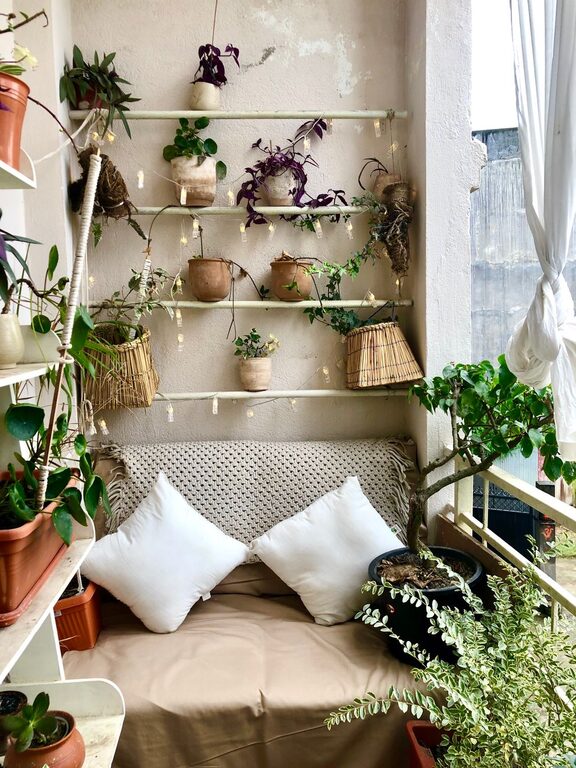
Plants add colour, texture, and a natural sense of calm. You do not need many to make an impact. A few well-placed planters can make a plain balcony feel lively and inviting.
Choose plants according to the amount of sunlight your balcony receives. Sunny spaces may suit herbs, lavender, geraniums, or other sun-loving plants. Shadier balconies may work better with ferns, begonias, or other shade-tolerant varieties. If you are unsure, ask a local garden centre for recommendations suited to your growing conditions.
To save floor space, consider:
– Railing planters
– Hanging baskets
– Vertical plant stands
– Wall-mounted pots
– A narrow plant shelf
– Small pots grouped on a stool
Use sturdy planters and make sure they are securely placed. Check building rules before attaching anything to a railing or wall. Avoid blocking drains, doors, or shared walkways.
Create Privacy Without Closing In the Space
A small balcony can feel more comfortable when it offers some privacy. If you overlook a busy area or share close sightlines with neighbours, use light screening rather than covering every surface.
Possible options include:
– Tall potted plants
– A bamboo-style screen
– Outdoor curtains
– A folding privacy panel
– A trellis with climbing plants
Choose a solution that still allows light and air to pass through. In windy locations, make sure screens, curtains, and tall planters are firmly secured. A simple privacy feature can make the balcony feel like a personal retreat without making it seem enclosed.
Select a Consistent Colour Palette
A small space often looks more polished when the colours work together. Start with two or three main shades, such as warm beige, green, and terracotta. You can then add a small amount of contrast through cushions, planters, or decorative items.
Light colours can make the space feel brighter, while natural tones create a calm and comfortable look. If your balcony already has a strong floor or wall colour, use it as part of the palette rather than trying to cover it.
You can create a cohesive style with matching details, such as:
– Similar-coloured planters
– Coordinated cushions
– A rug that repeats one accent colour
– Wood, metal, or woven finishes used throughout
Keeping the palette simple also makes it easier to update the balcony with seasonal accessories.
Make Use of Vertical Space
When floor space is limited, look upward. Vertical storage and decoration can help you add useful features without making the balcony feel crowded.
A tall, narrow shelf can hold plants, books, or small lanterns. A wall-mounted table can provide a work surface that folds away when it is not needed. Hooks may be useful for lightweight gardening tools, though they should only be installed where permitted.
Avoid adding too many objects to the walls or railing. A few carefully chosen items will have more impact than a collection of decorations competing for attention.
Keep the Balcony Easy to Maintain
A cozy balcony should also be practical. Choose items that can withstand the local weather and be cleaned without much effort. Wipe down furniture regularly, shake out rugs, and remove fallen leaves from planters and drains.
At the end of the season, store cushions and delicate decorations indoors. Foldable furniture can be moved inside or placed in a protected storage area. Check plants regularly for dry soil, damaged leaves, or pests.
Finally, leave a little empty space. The most inviting balcony is not necessarily the one with the most accessories. A comfortable seat, pleasant lighting, a few plants, and room to breathe may be all you need to create a warm outdoor retreat.